skip to main |
skip to sidebar
 Taiwan was occupied by Japan for an extended period of time, for around 50 years until 1945. Still some older people speak Japanese. Despite the occupation period, Japan seems to enjoy a rather good reputation in Taiwan, as opposed to other countries that have seen Japan as an invader. The fact that the Japanese lay the foundation for the country`s economical success that followed later by remodelling its infrastructure, namely transportation may have contributed to this.
There is a heavy presence of Japanese companies and brands and their popularity is soaring among young people especially. Japan seems to be considered cool and hip and technologically cutting-edge from what I have heard. Tokyo is an extremely popular destination for short trips, especially shopping trips. Japanese pop music is very popular. Japanese fashion is sold in hip boutiques and is considered super trendy among the 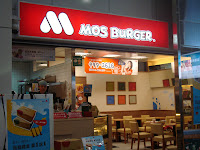 young. Luckily though they show a bit more restraint in expressing their fashion sense... The large Japanese department stores and clothes brands have jumped on that train and opened branches in Taiwan`s cities. Mitsukoshi and Co. can be seen all over Taipei and other cities.
Japanese food is equally en vogue. Sushi now also features the menu on the night market where you can grab some dirt cheap nigiri. Some Japanese chain restaurants like Yoshinoya or the Japanese competitor to McDo, Mo`s Burger are very present and popular too.
The title of the article is provocative to a Taiwanese for sure. And it certainly isn`t "Little Japan" that much. But the influence of Japanese culture is visib le and does not seem to be rejected. Is it a genuine love for all things Japanese? Or is it rather a second worst alternative for a country that tries to distinguish itself from the threatening "homeland" China from where most of its culture comes from? Obviously, the leaning towards America is strong as well. Besides all Taiwanese having an English name as well they also are quite keen English learners and way more successful than the Japanese. The Japanese language seems to have lost almost all significance, young people focus on English study and skip Japanese. However, Japanese words such as "sugoi", "kawaii" etc. are very trendy and you hear exclamations of those by the young generation very often, so again Japan provides the fashionable element.
 I would have associated Japan with several sports before I came here. Having been an active judoka a few years ago I certainly knew a few things about Japanese martial arts, I knew that they have a few good downhill skiers, J-League is a retirement place for European soccer stars and of course there`s the famous sumo fighting. What I didn`t know is that this nation is so crazy about golf and above all baseball.
Baseball seems to be an issue of major national relevance. Numerous tv reports are dedicated to it, every decent sized city features a huge baseball stadium and you see school kids practise everywhere. Actually the Yahoo baseball dome in Fukuoka was the first Japanese sight that I noticed when arriving in this country last year. Baseball players are superstars here and a baseball game draws masses. Right now it`s not season, so I`ll still have to wait for my first visit to a game. To my disgrace I have to admit that I haven`t been to one yet, though Fukuoka especially is a center of baseball. I enjoyed playing it back in High School and have a rough idea of the ru les, so it should be fun.
I just watched a tv show on baseball and it was quite funny. They were dwelling on Japan`s successes over and over and namely comparing it to Korea`s. Japan and Korea in baseball seems to be like Switzerland and Austria in downhill skiing. Both are good at it, for both it`s a higly relevant sport and the neighbour is the (perceived) biggest competitor. Of course the statisticc picked made Japan look good, the players compared made Japan look good, etc... They talked about some other baseball nations as well such as the US, Cuba or Australia, but it was quite obvious that the topic of the show was the baseball rivalry between Korea and Japan.
I remember having watched a live baseball game between Japan and Korea from the Beijing Olympics on tv while being on the ferry from Japan to Korea. I can tell you that was quite a spectacle with both Korean and Japanese spectators on board... Thanks God they do not have much hooligan tendency on either side of the Sea of Japan...
I recently came across the homepage of a Tokyo based semi-academic organiziation named The International House of Japan. http://www.i-house.or.jp/en/index.html It's goal is "promoting cultural exchange and intellectual cooperation between the peoples of Japan and those of other countries." They have public lectures on Japanese or Asian issues a few times a month.
I signed up for a lecture on Japanese foreign policy "Japanese Foreign Policy: Balancing off Asia, Europe and the United States", held by a professor of Asian Studies from the University of Berkeley, California , T.J. Pempel. The lecture focussing on Japan defining its new role within the international community due to the rise of its larger neighbour China seemed a highly interesting subject.
The lecture started with a historical backflash to WWII and the Cold War to explain why Japan has had very close connections with the US since and has refrained from building strong economic ties with China (Cold War pressure). So Japan developed a unilateral strong bond with the US while neglecting cooperation with the rest of Asia and Europe. Today both economic and military connections with the US remain strong. The Bush government has put the emphasis on unilateral relationsships and has therefore continued the existing predominant type of interaction. Should the democratic party win the presidential elections, this would change. Obama's team has already announced that they would focus on multilateral interaction rather, involving various parties in Asia.
With Asia, economic ties have been severed in the more recent past and China has become Japan's major trade partner, replacing the US in that role. Korea has experienced the same shift in Political relations with China and Korea remain somewhat difficult due to what is perceived by both countries as Japan's neglect to deal with the historical legacy, something the country will need to address in order to establish stronger ties with its neighbours. There is a military threat from North Korea and the lecturer suggested a perceived threat by China as well. Ties with Europe remain rather weak, but have had a multilateral nature and are increasing in importance for Japan.
Professor Pempel stated that Japan will remain an important partner for the West in Asia, but will loose the exclusive status of Asia's core economic and democratic center. While Japan is afraid of loosing its dominant role to China, it is likely that Asian-Pacific economic and political institutions will be steered by several different players including India, Australia and Japan. Pempel predicted that a more European-style model of governance would emerge in Asian institutions, with multiple players sharing the lead.
 Taiwan was occupied by Japan for an extended period of time, for around 50 years until 1945. Still some older people speak Japanese. Despite the occupation period, Japan seems to enjoy a rather good reputation in Taiwan, as opposed to other countries that have seen Japan as an invader. The fact that the Japanese lay the foundation for the country`s economical success that followed later by remodelling its infrastructure, namely transportation may have contributed to this.
 young. Luckily though they show a bit more restraint in expressing their fashion sense... The large Japanese department stores and clothes brands have jumped on that train and opened branches in Taiwan`s cities. Mitsukoshi and Co. can be seen all over Taipei and other cities.
 le and does not seem to be rejected. Is it a genuine love for all things Japanese? Or is it rather a second worst alternative for a country that tries to distinguish itself from the threatening "homeland" China from where most of its culture comes from? Obviously, the leaning towards America is strong as well. Besides all Taiwanese having an English name as well they also are quite keen English learners and way more successful than the Japanese. The Japanese language seems to have lost almost all significance, young people focus on English study and skip Japanese. However, Japanese words such as "sugoi", "kawaii" etc. are very trendy and you hear exclamations of those by the young generation very often, so again Japan provides the fashionable element.